Our Lagoon 47 Live in Cannes – First Look at our new Boat
Two days at the Cannes Yachting Festival: we see the new Lagoon 47 live for the first time, explore its design and details, and present the equipment chosen for our MANAIA.
Our First Encounter with the Lagoon 47 – Two Days in Cannes
You can spend months studying plans, looking at renderings, comparing equipment lists and discussing every single option. But at some point, there comes the moment when you finally see your future boat in front of you for the first time.
For us, that moment came last week at the Cannes Yachting Festival.
For two days, we walked around the show, saw the new Lagoon 47 live for the first time, examined countless details, took photos and spoke with other skippers and owners. And, of course, there was one question above all:
Had we made the right decision with the Lagoon 47?
After those two days, our answer was quite clear: yes.
And in several respects, the boat impressed us even more than we had expected.
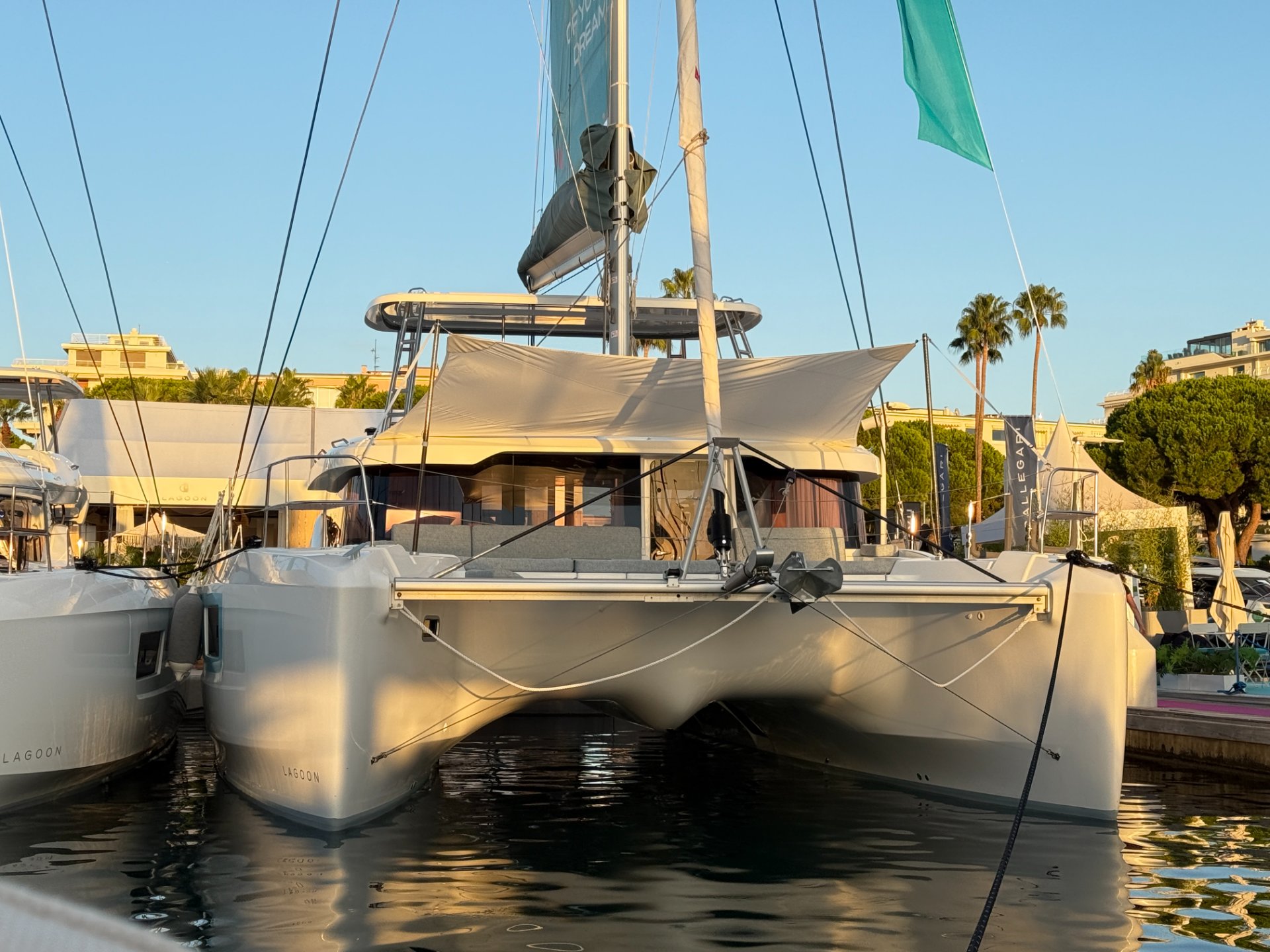
Lagoon Has Listened
One of the first things that stands out about the new Lagoon 47 is that many of its solutions do not feel like ideas developed purely at a design desk. They feel like responses to real-life experience on board.
Lagoon itself confirms this approach. The yard describes the 47 as a boat developed around the ideas and wishes of its users. According to reports quoted on Lagoon’s website, around 2,000 Lagoon owners were involved in the development process. And you can feel it.
Not because of one spectacular feature, but because of many small details: movement around the boat, storage, visibility from the helm, cabin layout, usability of the outdoor areas and the way the different living spaces connect.
To us, the Lagoon 47 feels less like a completely reinvented boat and more like the result of many years of experience gathered from previous Lagoon models.
What Surprised Us Most: The Build Quality
One of the strongest impressions came from the interior finish.
We have seen many catamarans at previous boat shows and by now we know fairly well where to look: panel gaps, hinges, fittings, cupboard doors, surfaces, transitions and all the small areas that usually do not appear in glossy marketing photos. The yacht displayed in Cannes made an exceptionally good impression.
The furniture appeared very well finished, doors and cupboards felt solid, the materials looked high-quality and the entire interior felt more mature than what we have sometimes seen on earlier production catamarans.
Of course, the boat in Cannes was a show yacht and not our own production boat. Even so, the quality on display was a very positive sign for us.
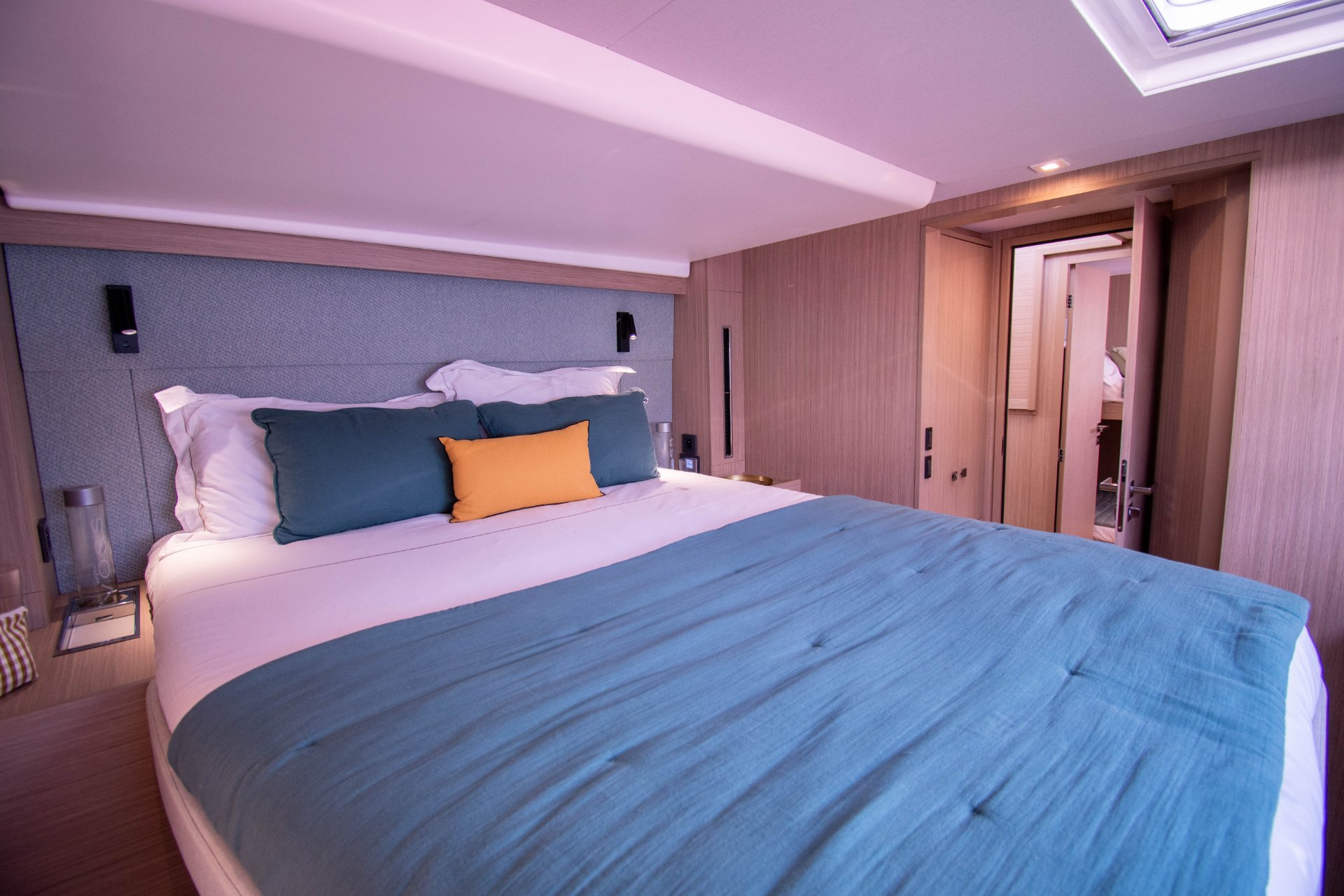
For MANAIA, we chose the Sorrento design for the interior – exactly the combination we also found particularly harmonious in the photos and on the yacht displayed at the show. Bright modern surfaces, warm wood tones and an overall calm design work very well for a yacht on which you do not just spend one week on holiday, but where you may live for extended periods.
The Real Highlight: Walking Straight Through the Boat
If we had to name one feature that sets the Lagoon 47 apart from many other catamarans in this class, it would probably be this: You can walk directly from the aft cockpit through the saloon and straight onto the foredeck.
Open the aft door, walk through the saloon, open the forward door – and you are standing in the large forward cockpit. It sounds simple. But it is not.
On traditional catamaran layouts, you normally have to walk around via the side decks to get from the cockpit to the bow. On the Lagoon 47, by contrast, there is a genuine line of movement from stern to bow. Interior and exterior spaces almost flow into each other.
Lagoon refers to this as “interconnected areas”. That describes it very well.
What is particularly impressive is the size of the forward cockpit: 12 square metres. It offers proper seating and plenty of space, so it is not just another sunbathing area, but a genuine additional living space on board.
For us, this direct connection is one of the absolute USPs of the Lagoon 47.
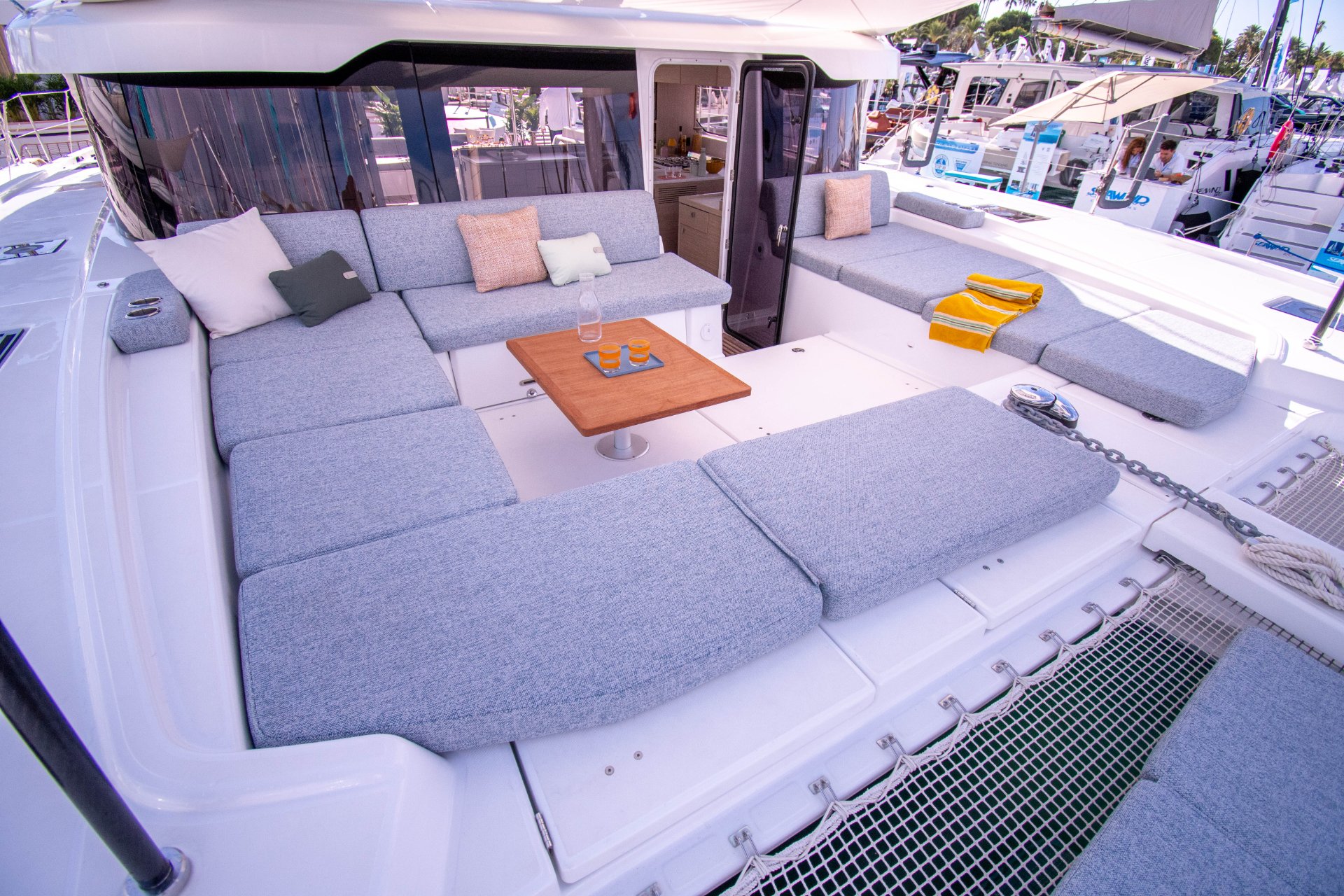
12 Square Metres of Extra Living Space at the Bow
Especially in the Mediterranean, this area will probably become one of our favourite places.
In the morning at anchor, when the aft cockpit is still in the shade. In the evening at sunset. Or simply whenever you want a little distance from the rest of the activity on board.
What makes it so interesting is that the Lagoon 47 does not simply gain another seating area. The entire boat changes. Aft cockpit, saloon and foredeck become three connected spaces. And above them is the flybridge.
Lagoon itself speaks of more than 40 square metres of living space spread across three outdoor areas.
For MANAIA, it was also important to us that these areas should not only work in full sun. That is why all major outdoor areas can be shaded with sun awnings in our configuration. In the Croatian high summer, this is not a minor detail for us, but a genuine comfort feature.
Our Layout: Somewhere Between Owner’s Yacht and Charter Yacht
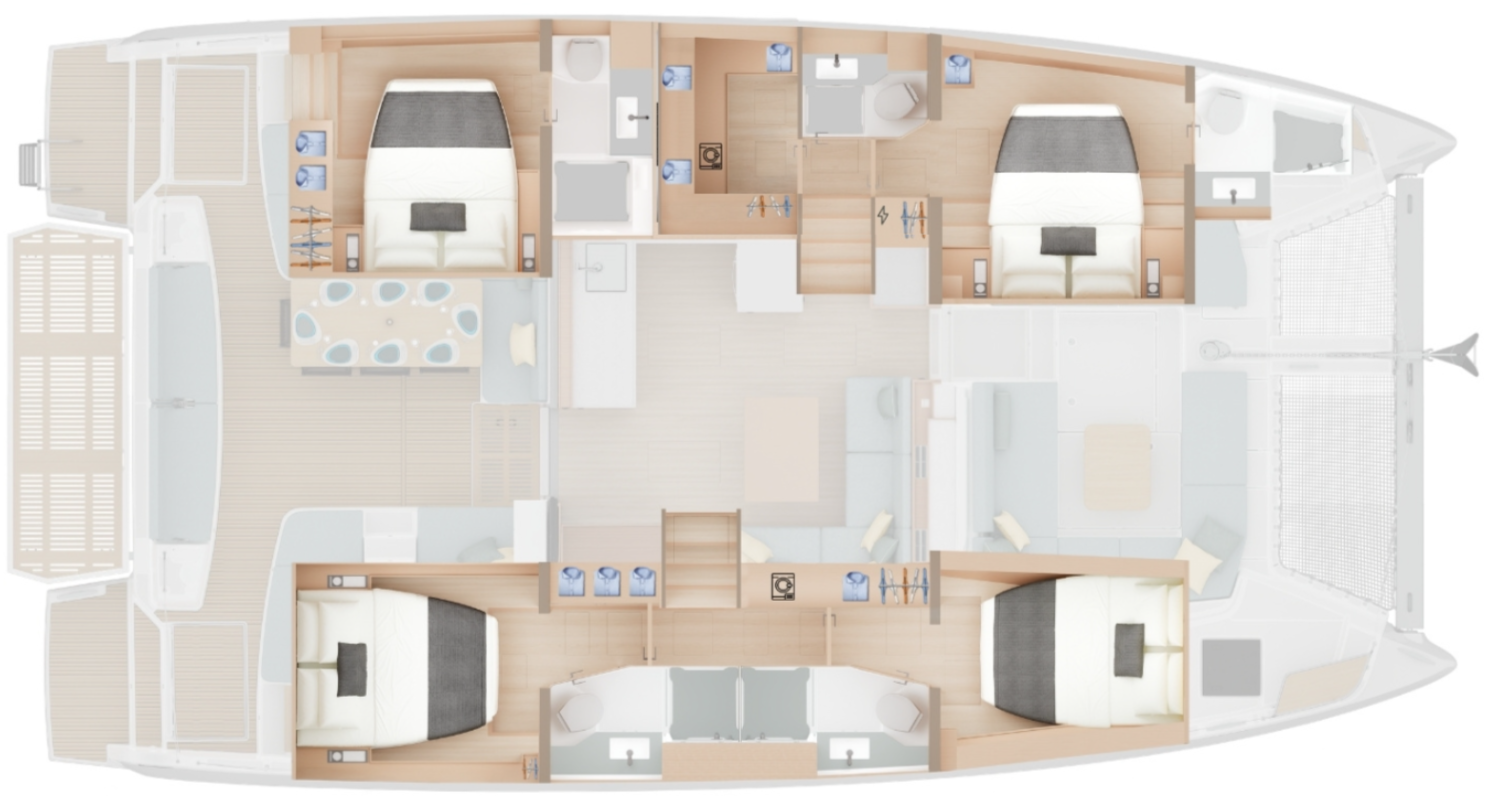
For MANAIA, we chose a configuration with four double cabins plus a storage/utility room.
For the way we intend to use the yacht, this is almost ideal.
We want to operate MANAIA professionally for our guests, while at the same time keeping her as our own yacht. A pure charter layout would therefore have involved too many compromises, while a classic owner’s version would have reduced valuable guest capacity. Our solution sits right in between. In particular, the forward section of the port hull can almost be used as a private owner’s area. Together with the adjacent spaces and two bathrooms on this side, it creates a surprising amount of privacy. At the same time, we retain four full double cabins.
The additional storage/utility room was also important to us. Anyone who lives or works on a yacht for longer periods knows how valuable a dedicated space can be for tools, spare parts, supplies, equipment and all the other things that would otherwise end up spread across cabins and cupboards.
For an owner-operated concept like ours, we consider this one of the most sense making layout options available.
Every Cabin with Its Own Air Conditioning
When it came to comfort, we did not want to compromise. That is why every cabin on MANAIA will have its own air conditioning unit. This allows each cabin to be individually temperature-controlled without everyone having to accept the same setting.
This is especially relevant with charter guests and is often underestimated. One person likes to sleep in a cool cabin, while another barely uses air conditioning at all. Individual control makes this much more comfortable.
Combined with our energy system and the Silent Mode concept, the air conditioning should also be usable as often as possible without requiring the generator to run continuously.
The Helm Is Exactly Where We Want It
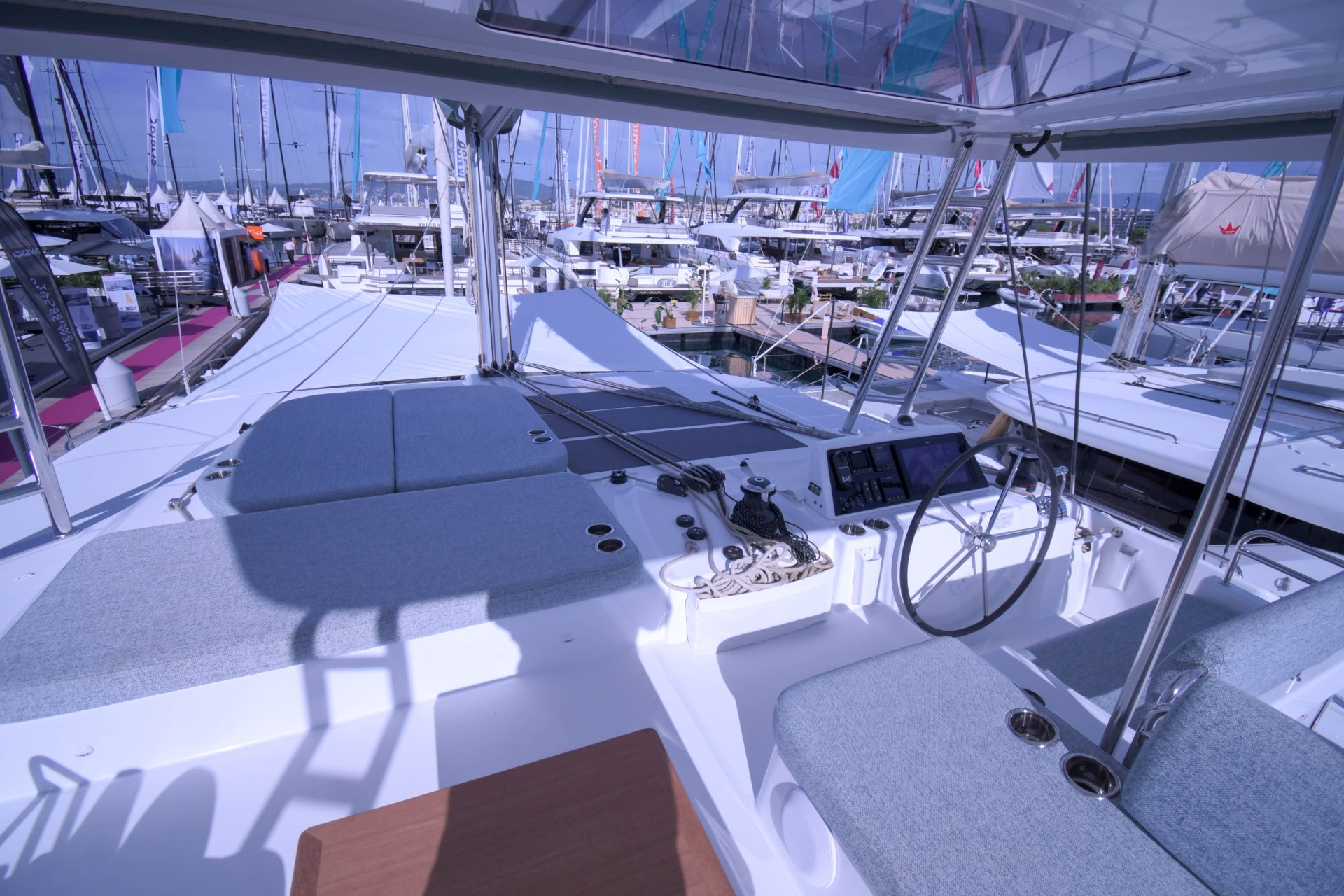
Another change we like very much is the location of the helm on the starboard side of the flybridge. For us as skippers, this is more than a design decision.
When docking and leaving a berth, visibility makes the difference between relaxed manoeuvring and unnecessary complication. From the starboard side, that side of the yacht can be monitored particularly well, while communication with the cockpit remains possible.
MANAIA will also be fitted with cameras at the stern. This gives us additional visual control when reversing and especially when docking, covering areas that naturally cannot be seen perfectly from the helm.
This is also important for our future charter operation. Despite being almost 15 metres long, MANAIA should remain a yacht that can be handled in a controlled and manageable way with a small crew.
And She Should Sail, Too
Comfort is important to us. But MANAIA remains a sailing yacht. That is why we spent a lot of time thinking about the rig, running rigging and ease of handling.
The line routing to the helm appears clean and logical. This is especially important when there are not always several experienced sailors on deck.
With our equipment package, we are taking this one step further: All winches are electric.
The headsail furling system is electric, as is the bowsprit furling system. This makes the main sail-handling manoeuvres considerably easier, even with a small crew.
When it came to the rig, we deliberately decided against the furling mainsail solution.
In addition to the furling configuration, Lagoon offers the Lagoon 47 with a classic mast and classic canoe boom as an optional setup. That is exactly the version we chose.
For us, the decision was relatively straightforward: the furling mainsail is convenient, but it offers significantly less sail area. We preferred a classic mainsail with proper sail area and a rig that matches our idea of what a true sailing catamaran should be.
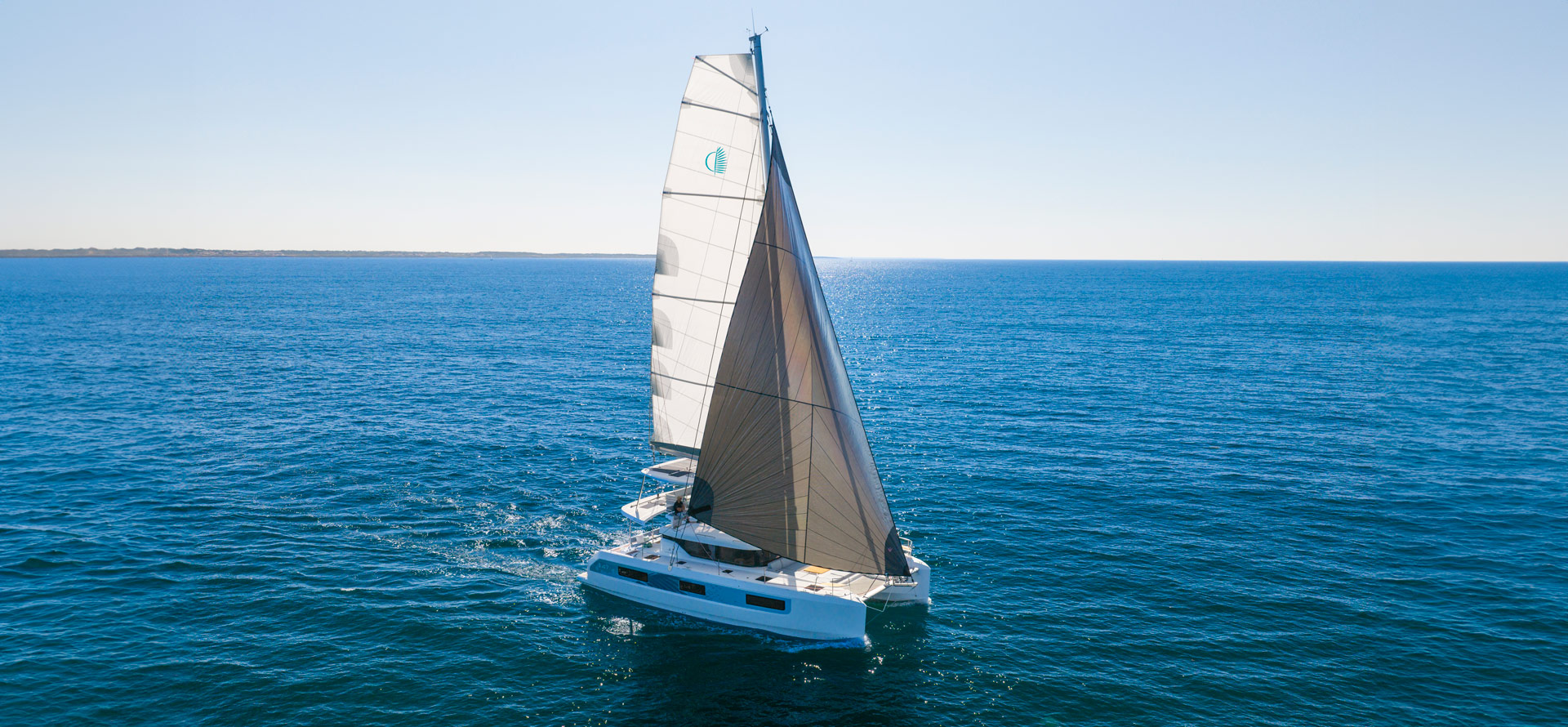
MANAIA will also carry both a Code Zero and a gennaker. This significantly broadens our sailing range, especially in lighter winds and on longer passages where additional sail area and a more flexible sail plan can make a noticeable difference. The official figures also make it clear that we are no longer talking about a small yacht: 128 m² of upwind sail area is specified by Lagoon for the Lagoon 47.
The standard configuration is offered with a smaller furling mainsail. For MANAIA, however, we deliberately chose the classic mast/canoe boom setup.
Almost 15 Metres – Yet It Does Not Feel Oversized
On paper, the Lagoon 47 is already a fairly large yacht.
The official specifications are:
14.95 m overall length
7.96 m beam
1.25 m draft
18 tonnes light displacement according to CE figures
128 m² upwind sail area
2 × 57 hp engines
700 litres fresh water
860 litres diesel
The Lagoon 47 was designed by VPLP Design, with exterior design by Patrick le Quément and interior design by Nauta Design. Despite these dimensions, we never had the impression on board that we were moving around an unwieldy yacht. That is probably one of the biggest compliments you can give a catamaran of almost 15 metres.
Autonomy Was a Key Priority for Us
Another major focus of our configuration is the ability to remain as independent as possible while at anchor.
MANAIA will therefore be fitted with a watermaker, so that we do not have to enter a marina every time we need to refill the fresh-water tanks. For the way we intend to use the yacht in Croatia, this is essential. We want to spend as much time as possible in bays and not have to plan our route around the next opportunity to take on water.
We also configured the energy system accordingly. MANAIA will have a 12 kW Onan generator. In addition, she will be fitted with solar panels on both the saloon roof and the flybridge roof. This gives us three energy sources: shore power, generator and solar energy – complemented by a powerful battery bank.
The aim of this combination is to allow us to remain autonomous for as long as possible and only run the generator when it is genuinely needed.
Silent Mode: Ideally No Generator at Night
MANAIA will also be equipped with Lagoon’s Lithium Silent Mode Package.
The idea behind it is particularly interesting to us: large electrical consumers should be able to run from the battery bank without the generator having to operate continuously. At anchor during the night, this could be a major comfort advantage.
Our goal is to run the air conditioning from the battery bank during the night, while using the generator during the day or early evening for targeted recharging and other high-load consumers.
Together with the solar panels, this creates an energy system in which the generator does not automatically need to start every time more power is required.
We will measure the actual battery capacity and real-world air-conditioning runtime ourselves once the yacht is in operation. Lagoon currently does not publish sufficiently reliable runtime figures for the specific Silent Mode configuration of the Lagoon 47. So rather than answer that question theoretically, we will test it later under real conditions.
One thing is already clear: a quiet yacht in a Croatian bay, without a generator running for hours during the night, is very close to our idea of comfort.
Electric Bathing Platform – A Small Detail with a Big Effect
At the stern, we also chose an option we are particularly looking forward to: the electric bathing platform. On a charter catamaran, the stern is one of the most frequently used areas anyway. Swimming, snorkelling, SUPs, the dinghy, watersports or simply sitting with your feet in the water – much of life on board happens here.
With the lowering platform, access to the water becomes considerably larger and more comfortable. At the same time, it makes getting in and out easier and effectively creates an additional terrace right at water level when at anchor.
With the watersports activities we are planning, this area will probably be used very frequently.
Things You Only Really Notice Once You Are On Board
Then there are all those details that barely appear on a specification sheet.
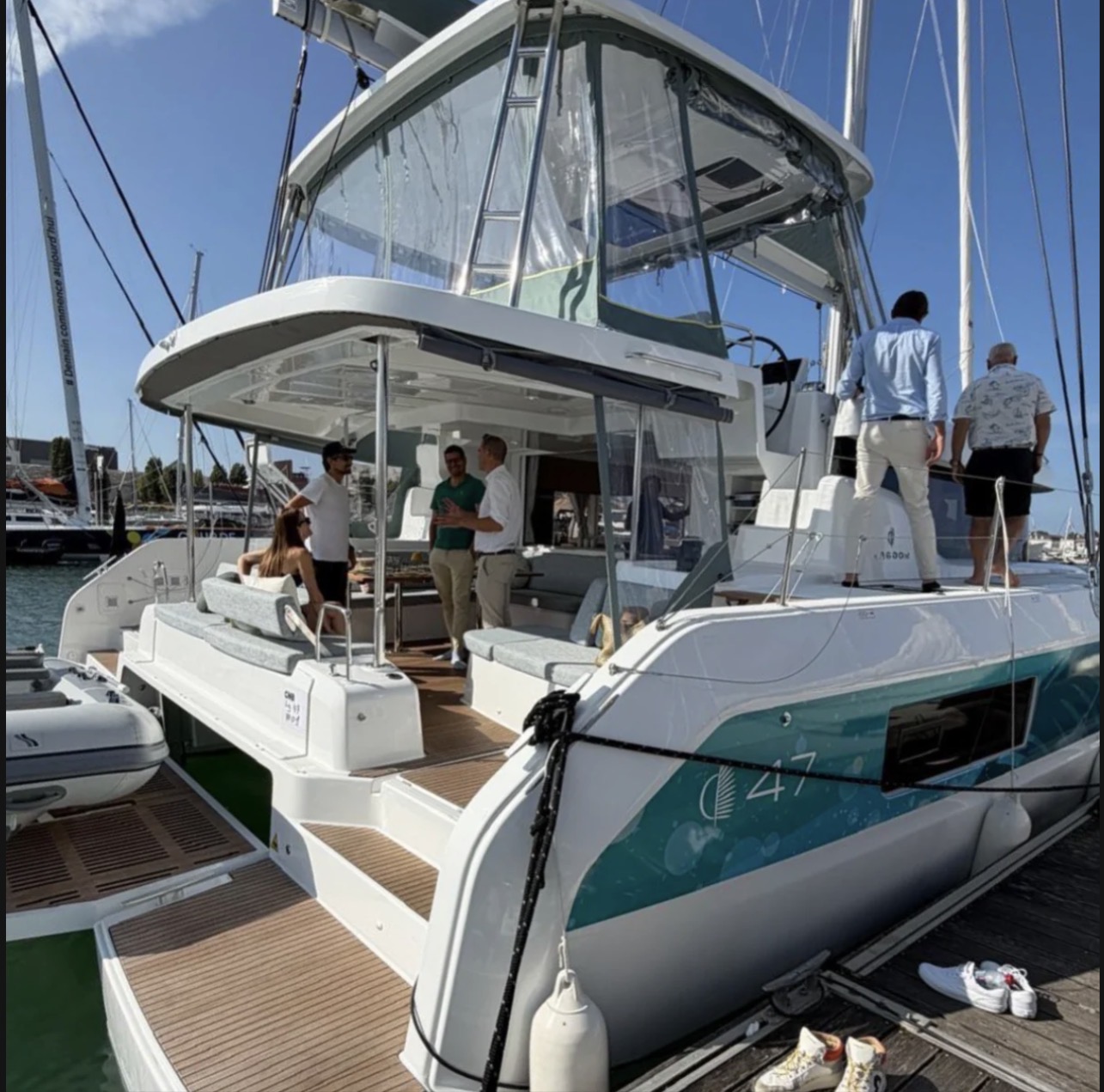
The huge refrigerator. The modern onboard electronics. The sensibly arranged storage spaces. The wide walkways. The dimensions of the forward cockpit. The large windows. The sightlines through the saloon. The fact that several people can spend time in different areas of the yacht at the same time without constantly getting in each other’s way.
Or simply the sum of all the equipment choices we made for MANAIA: electric winches, electric furling systems, stern cameras, watermaker, generator, solar power, individual air conditioning in every cabin, Silent Mode, electric bathing platform and the possibility to shade almost every outdoor area. None of these features alone makes a yacht. But taken together, they determine how comfortable life on board will actually be.
Two Days, Many Conversations and Even More Anticipation
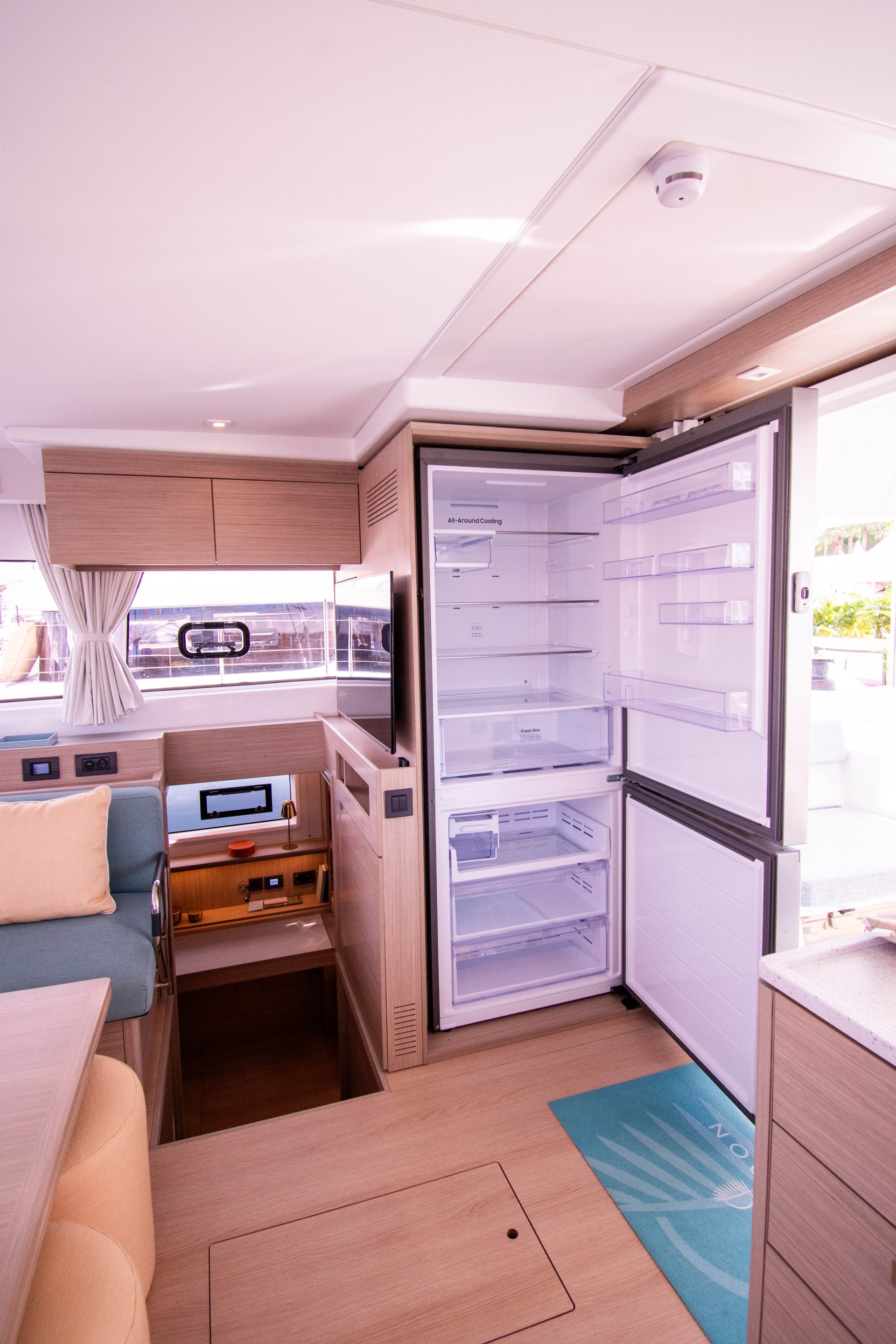
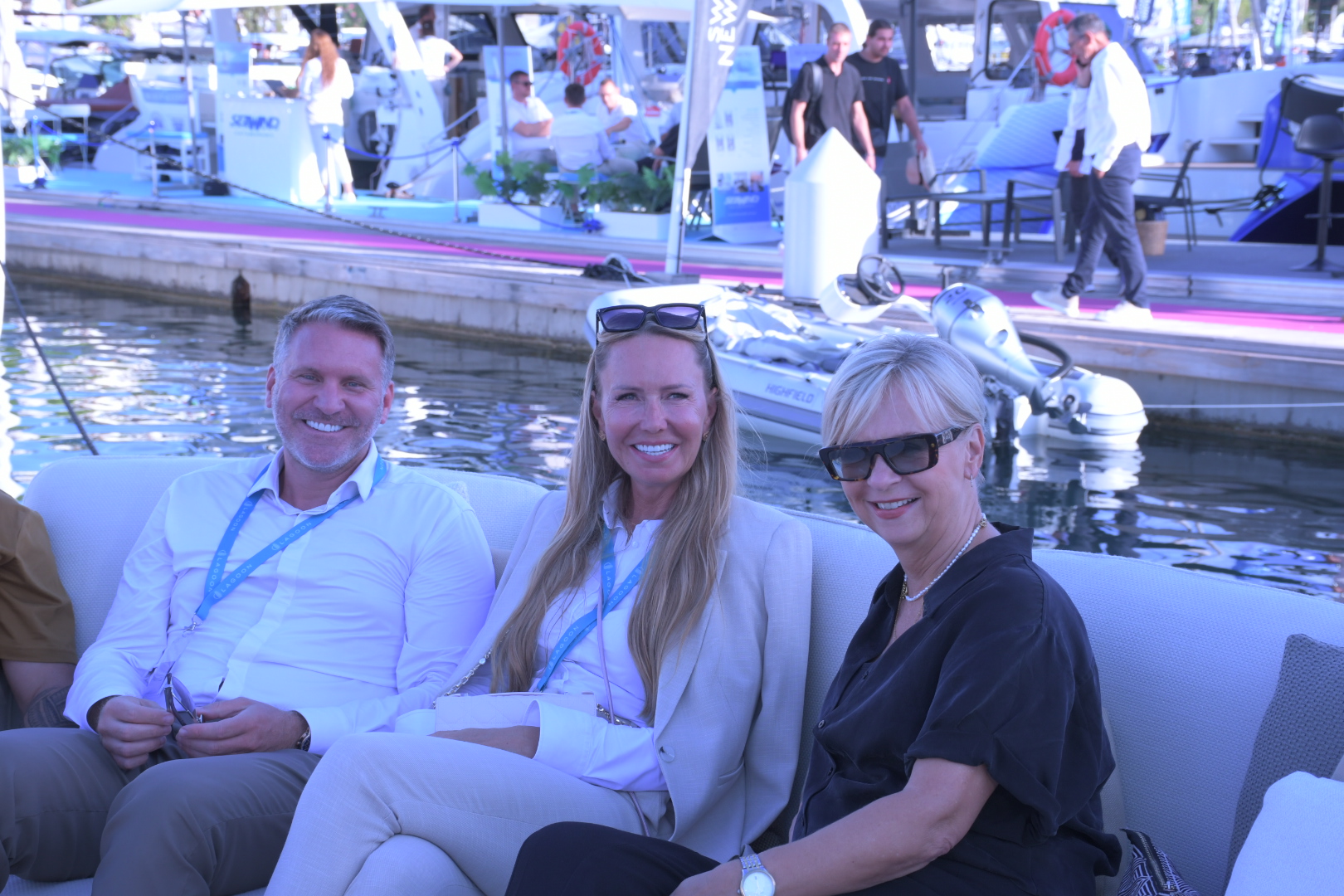
Almost as interesting as the yacht itself were the conversations we had at the show. With other owners. With skippers. With people who have spent many years sailing catamarans. You suddenly find yourself discussing things that probably only yacht owners can seriously talk about for minutes at a time: line routing, storage volume, dinghy solutions, battery capacity, winch positions or the question of where exactly you can best see a piling when reversing. But that is precisely what makes boat shows so valuable. Brochures can communicate technical data. Experience comes from conversation.
And Suddenly a Project Becomes a Real Yacht
Until now, MANAIA has existed for us largely in the form of plans, configurations, option lists, drawings and many decisions. In Cannes, that changed.
We were able to walk through the very spaces that will soon become our home on the water.
We stood at the helm. We sat in the forward cockpit. We opened cupboards. We walked through the cabins. And for the first time, we could clearly imagine what it will feel like when MANAIA is no longer just a name on an order confirmation, but is actually floating in front of us.
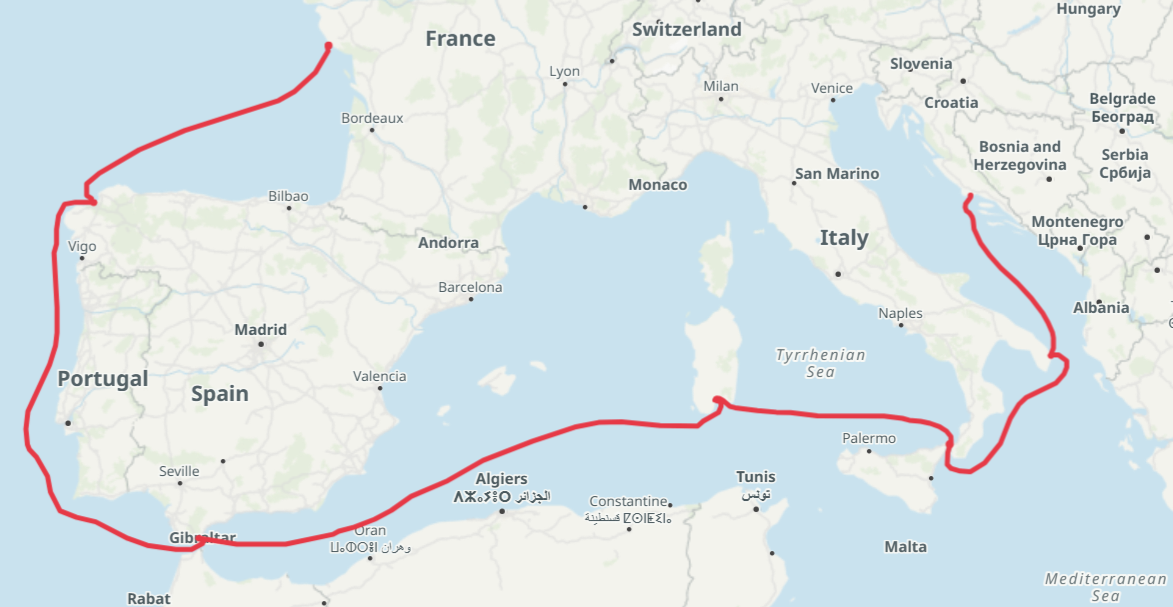
In mid-May, the time will finally come. That is when we will take delivery of our Lagoon 47. And immediately afterwards, the next chapter begins: the delivery passage towards Croatia and MANAIA’s first real voyage. It will take us 2,500 nautical miles from Les Sables-d’Olonne across the Bay of Biscay, down along the Portuguese coast to Gibraltar. After a stopover in Gibraltar, we will continue through the western Mediterranean, passing south of Sardinia, through the Strait of Messina between Sicily and the Italian mainland, on to Otranto and from there on one final leg directly to Trogir and our home port in Seget-Donji.
We are planning for around 17–20 days underway, during which we will not only get to know the yacht, but also put her through a thorough real-world test. Depending on the weather, the crossing of the Bay of Biscay may already provide the first real challenge for both yacht and crew.
We are looking forward to it. Tea, our employed skipper, and I will take turns in command of the yacht, supported by a third skipper.
We are looking forward to it even more now than we were before Cannes. Because now we know exactly what we are waiting for.